
UNICEF Warns Nearly Half of the World’s Children Are Exposed to Multiple Climate Threats

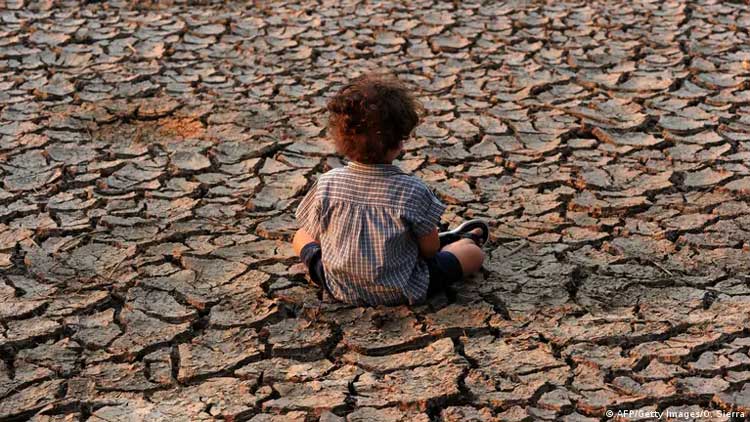
More than one billion children worldwide are exposed to at least three overlapping climate hazards, according to a UNICEF report released on Monday, underscoring the growing impact of climate change on the world’s youngest population.
The UN agency analyzed where the planet’s roughly 2.4 billion children live and compared it with the geographic spread of eight major climate-related threats: coastal flooding, river flooding, drought, tropical storms, heat waves, extreme heat, wildfires, and sandstorms.
The report found that 1.1 billion children are exposed to three or more of these hazards. The most common combination—drought, extreme heat above 35 degrees Celsius, and heat waves—affects nearly 296 million children globally, including 74 million in Nigeria, 34 million in Pakistan, and 32 million in India.
Exposure has risen significantly over the past two decades. Nearly all children worldwide—around 2.3 billion—face at least one climate-related risk, while two billion are exposed to at least two hazards. About 364 million children confront four or more threats, and 123,000 are exposed to seven or more, including roughly 46,000 in Myanmar.
“Children are at the forefront of the impact of climate change,” UNICEF Executive Director Catherine Russell said.
Climate ‘Hot Spots’
The report identifies Sub-Saharan Africa and parts of South Asia as the regions where climate risks are most concentrated.
Countries with large child populations, including Bangladesh, India, Nigeria, and Pakistan, account for the highest numbers of children exposed to at least three climate hazards. However, when measured as a share of the child population, several countries in the Sahel region of Africa rank among the most vulnerable.
Chad illustrates the challenge. Facing a humanitarian crisis marked by limited access to water, electricity, and food, more than 95 percent of children in the country are exposed to at least three climate hazards—one of the highest rates globally.
UNICEF also highlighted the vulnerability of 39 island nations, where limited freshwater resources, dependence on imports, and restricted relocation options after disasters such as hurricanes increase risks for children.
No Country Fully Protected
While some regions are less exposed than others, the report concludes that no country is immune to climate-related threats.
According to report co-author Tom Slaymaker, small pockets of populations with lower exposure are generally found in parts of the Northern Hemisphere, particularly Scandinavia. However, he noted that the study examined only the eight most common climate hazards worldwide, meaning children in those areas may still face other climate-related dangers, such as melting glaciers and thawing permafrost.
The findings highlight how climate change is increasingly shaping childhood experiences across the globe, with the heaviest burden falling on countries least equipped to respond.
Comments are closed.