
UP, Bihar, Uttarakhand evacuate residents as Nepal floods kill 160, over 800 missing

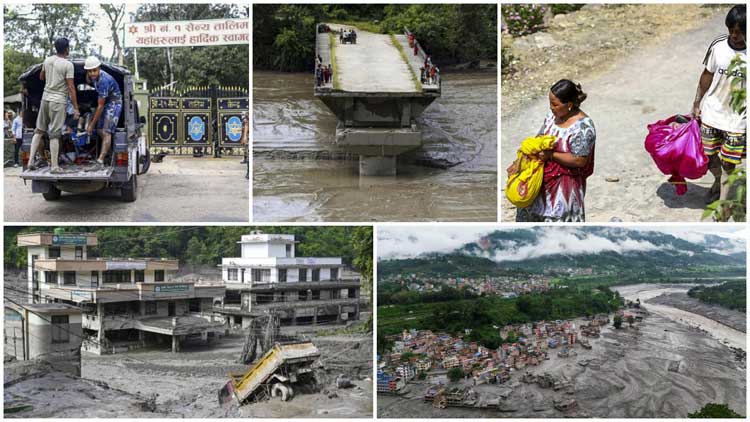
Flash floods in Nepal have caused widespread destruction, sweeping away homes, roads, bridges and power infrastructure along the Bhote Kosi and Trishuli rivers. Dozens of people were swept away, while hundreds remain missing as rescue teams continue operations in the worst-hit areas.
The disaster has also put authorities in Uttar Pradesh and Bihar on high alert, with evacuations underway in vulnerable areas of districts along the border.
Nepal floods leave massive destruction
Floodwaters tore through settlements along the Bhote Kosi and Trishuli rivers, leaving villages buried under mud and debris. Aerial footage from rescue operations showed homes destroyed, vehicles washed away and bridges collapsing into the raging waters.
Several metres of mud covered houses, trees and vehicles in some areas. Helicopters continued to airlift survivors and stranded residents to safety.
“The settlements next to the river have been completely swept away. Five of my own relatives are missing,” Tula Bahadur BK, a health worker in Rasuwa, told Reuters.
The Nepali Army has been conducting rescue flights and urging residents living in high-risk areas near the rivers to move to safer locations.
Rescue and relief operations underway
More than 5,000 army and police personnel have been deployed for rescue operations and to recover bodies. Helicopters are also delivering tents, food and other emergency supplies to the worst-affected districts.
India has sent 10 metric tonnes of disaster-relief material, including temporary shelters, blankets, hygiene kits, solar lamps and medicines, Nepal’s Army spokesperson Raja Ram Basnet said.
The US State Department has also announced assistance of $500,000 and said it would send a disaster-response adviser.
Nepal’s National Disaster Risk Reduction and Management Authority said 826 people remained missing, with search operations continuing near the Nepal-China border.
What triggered the flash floods?
The US Geological Survey said seismic activity initially believed to have been caused by an earthquake was later linked to a glacial collapse and debris flow.
According to the agency, the glacial collapse triggered a chain of events that produced “catastrophic” impacts downstream in Nepal and Tibet, causing severe flooding and widespread destruction.
Comments are closed.