
World Cup reaches 100-goal milestone in just 33 matches as scoring spree continues

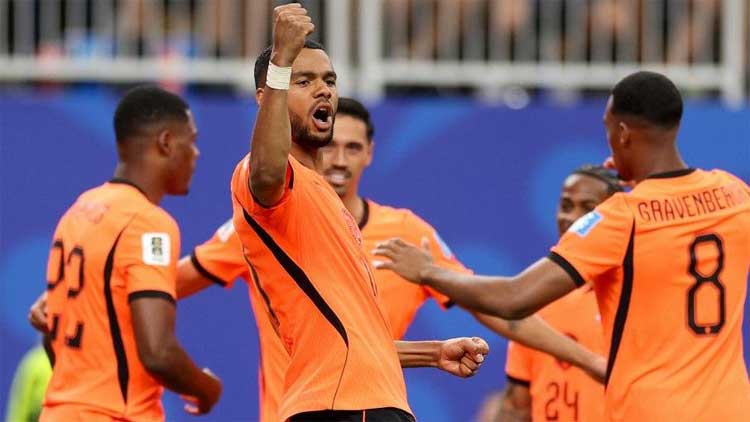
The ongoing FIFA World Cup reached a major milestone on Saturday when Netherlands forward Cody Gakpo scored his team’s third goal against Sweden, taking the tournament’s total to 100 goals.
This edition has become the second-fastest World Cup ever to reach the landmark, with 100 goals coming in just 33 matches — the quickest since 1954, when the mark was reached in only 20 games.
The previous fastest modern editions include the 2014 World Cup in Brazil and the 1982 tournament, where it took 36 matches to reach 100 goals. In the 1978 World Cup in Argentina and the 1994 edition in the US, it took 38 games.
With the tournament averaging more than three goals per match, several factors have been linked to the attacking trend.
Ball blamed for goalkeeping struggles
One possible reason is Adidas’ Trionda match ball, which has caused problems for some goalkeepers because of its unpredictable movement.
More than 10 goals have already been scored from outside the penalty area, while mistakes and spills inside the box have also contributed to the high tally.
Former England goalkeeper Paul Robinson said the ball’s behaviour was something to watch.
“There are one or two occasions where this football has not necessarily behaved as you would expect it to,” he said while working with BBC Sport.
The issue has drawn comparisons with the controversial Jabulani ball used at the 2010 World Cup in South Africa, which was criticised by several goalkeepers, including former England No. 1 David James.
Big wins fuel scoring surge
Several matches have produced heavy scorelines, including Germany national football team’s 7-1 win over Curaçao, Canada national football team’s 6-0 victory against Qatar and the Netherlands’ 5-1 win over Sweden.
Even closely contested matches have produced plenty of goals. England’s Euro 2022 winner Ellen White said the Netherlands-Japan match, despite being tactically strong, still ended with four goals.
More teams, more unpredictability
The expanded 48-team format has also been suggested as a factor behind the scoring rate.
With more debutants and less experienced teams competing, some sides are still adapting to the level of the tournament, creating mismatches against more established football nations.
Former Tottenham Hotspur FC and Brentford manager Thomas Frank said the increase in teams and lower-ranked sides has had some impact, though he added that most matches have remained competitive.
The high-scoring start has made this World Cup one of the most attacking editions in recent history.
Comments are closed.