
Operation Mahadev: How India neutralised three Pahalgam attack militants before they could flee to Pakistan

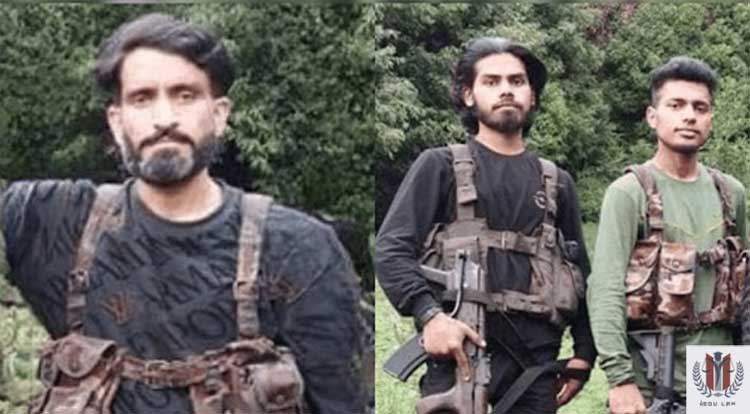
Months after 26 civilians were killed in the April 22, 2025 attack in Pahalgam, Indian security forces carried out a major counter-terror operation, eliminating the militants linked to the assault.
The success of the mission—codenamed ‘Operation Mahadev’—was announced in Parliament by Union Home Minister Amit Shah, who said it was jointly executed by the Indian Army, CRPF and the Jammu and Kashmir Police on July 28. The encounter took place in the forested Lidwas area near Harwan, on the outskirts of Srinagar.
Who were the militants?
The three militants killed were identified as Suleman, Hamza Afghani and Zibran. All were classified as ‘A’ category operatives of Lashkar-e-Taiba.
Suleman was described as a key commander and the alleged mastermind behind the Pahalgam attack, as well as another incident in Gagangir. The other two were also accused of involvement in the killings of civilians in Baisaran Valley.
How the operation unfolded
Following the April attack, a high-level security meeting led to a strategy aimed at preventing the attackers from escaping across the border.
The first breakthrough came on May 22, when the Intelligence Bureau received human intelligence inputs about militant presence in the Dachigam National Park area.
Over the next month, security agencies conducted coordinated surveillance using signal-tracking technology, with personnel operating on foot in difficult terrain and weather conditions.
On July 22, signals linked to the militants were detected, confirming their location. Security forces—including units led by 4 Para—then moved in, surrounded the area and neutralised the three militants.
How identities were confirmed
According to Shah, the National Investigation Agency had earlier arrested individuals who had provided shelter to the militants. These individuals later identified the bodies after the encounter, confirming their involvement in the Pahalgam attack.
Forensic evidence also played a key role. Weapons recovered from the militants were analysed, and cartridge shells were matched with those found at the Pahalgam attack site. The ballistic match confirmed that the same rifles had been used in the killings.
Comments are closed.