

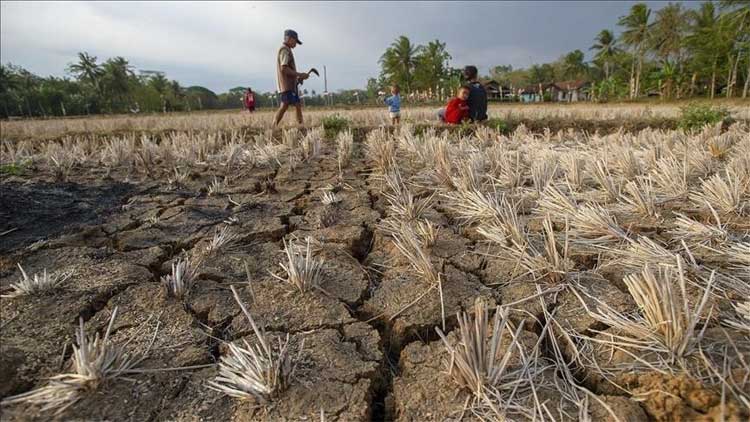
Extreme heat is pushing global agrifood systems to the edge, endangering the livelihoods and health of over a billion people, a new report by the Food and Agriculture Organization (FAO) and the World Meteorological Organization (WMO) has warned.
The agencies said heatwaves are becoming more frequent, intense, and prolonged, causing widespread damage to crops, livestock, fisheries, and forests. “Extreme heat is rewriting the rules on what farmers, fishers, and foresters can grow — and when. In some cases, it is even determining whether they can work at all,” said Kaveh Zahedi.
He added that the findings point to a deeply uncertain future, as rising temperatures continue to disrupt food production systems worldwide.
Recent climate data indicates that global warming is accelerating, with 2025 ranking among the three hottest years ever recorded. This trend is fuelling more frequent and severe weather extremes. Acting as a “risk multiplier,” extreme heat intensifies droughts, wildfires, and pest outbreaks, while sharply reducing crop yields once critical temperature thresholds are crossed.
Risks rise sharply with every degree of warming
The report highlights that rising temperatures are narrowing the safety margins within which plants, animals, and humans can function. Yields of most major crops begin to decline once temperatures exceed around 30°C.
Zahedi pointed to Morocco as a stark example, where six consecutive years of drought followed by record heatwaves led to cereal yields plunging by more than 40%, devastating olive and citrus harvests.
Marine ecosystems are also under strain. Marine heatwaves are becoming more common, reducing oxygen levels in water and threatening fish stocks. In 2024, 91% of the world’s oceans experienced at least one marine heatwave, according to the report.
The risks are expected to escalate rapidly. The intensity of extreme heat events could double at 2°C of global warming and quadruple at 3°C, compared to 1.5°C. Each 1°C rise in global temperatures is estimated to reduce yields of key crops — maize, rice, soybeans, and wheat — by about 6%.
The FAO and WMO cautioned that piecemeal responses will not be enough. They called for stronger risk governance and improved early-warning systems to help farmers and fishers adapt in time.
“If timely data reaches farmers, they can adjust planting and harvesting cycles and even switch crops,” Zahedi said.
However, the report stresses that adaptation alone cannot address the scale of the crisis. It argues that the only durable solution lies in coordinated global efforts to curb climate change and limit further warming.
Comments are closed.