
UN Rights Body Says Taliban’s Child Marriage Rules Violate International Obligations

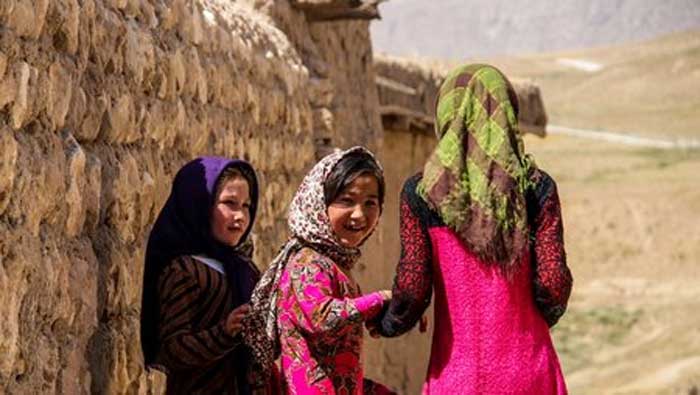
The UN Committee on the Rights of the Child has issued one of its sharpest rebukes yet of Taliban policies affecting girls in Afghanistan, warning that a newly adopted decree effectively legalizes child marriage and violates the country’s international human rights obligations.
At the center of the controversy is Taliban Decree No. 18, adopted in May and formally titled “Principles of Separation Between Spouses.” The decree abolishes Afghanistan’s previous minimum marriage age for girls and instead links eligibility for marriage to the onset of puberty.
Approved by Taliban supreme leader Hibatullah Akhundzada, the decree also states that a girl’s silence after reaching puberty may be treated as legal consent to marriage.
“The committee views the decree as a deeply alarming measure that effectively legitimizes child marriage and undermines the fundamental rights of children in Afghanistan,” said Sophie Kiladze, chair of the UN Committee on the Rights of the Child, in remarks to Arab News.
According to the committee, the decree directly conflicts with international standards intended to protect children from early and forced marriage.
“The provision that allows marriage upon reaching puberty and treats a girl’s silence as consent is incompatible with international human rights standards and with Afghanistan’s obligations under the Convention on the Rights of the Child,” Kiladze said.
The decree marks another major shift away from Afghanistan’s legal framework before the Taliban returned to power in 2021. Under the country’s 1977 Civil Code, girls generally could not marry before age 16, while boys had to be at least 18. Limited exceptions allowed marriage at 15 with approval from a father or a court. The 2009 Elimination of Violence Against Women law went further, criminalizing marriage of girls under 15 under any circumstances.
Most of those protections disappeared after the Taliban takeover, when the group suspended the 2004 constitution, halted enforcement of much of the previous civil code and increasingly replaced state institutions with religious decrees and Taliban-controlled courts.
Under the new decree, fathers and grandfathers are granted broad authority to arrange marriages for minors. Marriages arranged by other relatives may also be recognized if Taliban judges determine the match is socially appropriate and the dowry acceptable.
Critics say the decree’s most troubling aspect is its treatment of consent. A “virgin girl” who has reached puberty can be considered to have consented to marriage through silence alone, a provision that does not apply to boys.
“Puberty cannot be considered as adulthood or legal capacity to marry,” Kiladze said. “A child, by definition under the convention, is any person under the age of 18. Children inherently lack the maturity and legal autonomy necessary to provide consent to marriage.”
While the Convention on the Rights of the Child does not explicitly ban child marriage, it protects children through guarantees relating to education, health, protection from abuse, non-discrimination and participation in decisions affecting their lives. The committee argues the Taliban decree undermines all of these principles simultaneously.
“It undermines the principle of non-discrimination, particularly because it disproportionately targets and affects girls,” Kiladze said. “It conflicts with the obligation to ensure that the best interests of the child are a primary consideration in all actions affecting children.”
She added that the decree also threatens children’s rights to education, health, protection from violence and freedom of expression. “Silence cannot reasonably be interpreted as genuine consent,” she said.
Other international treaties are even more explicit. The Convention on the Elimination of All Forms of Discrimination Against Women states that child marriages should have no legal effect and requires countries to establish a minimum marriage age. Likewise, the Convention on Consent to Marriage requires the full and free consent of both parties.
Taliban officials have pointed to a provision that theoretically allows children married at a young age to seek annulment upon reaching puberty, a concept in Islamic jurisprudence known as khiyar al-bulugh, or the “option upon puberty.”
However, rights groups argue that the safeguard is largely ineffective in practice. A girl seeking annulment must petition a Taliban-controlled religious court and satisfy legal requirements that can be difficult to meet, often while facing severe restrictions on education, movement and economic independence.
“The committee’s primary concern is that the decree itself facilitates child marriage,” Kiladze said. “The Convention on the Rights of the Child is intended to prevent child marriage, not merely provide remedies after a violation has already occurred.”
Human rights advocates also point to the broader realities of Afghanistan’s judicial system under Taliban rule. Since taking power, the Taliban have replaced much of the country’s civil judiciary with religious tribunals staffed overwhelmingly by male clerics and judges, making access to justice increasingly difficult for women and girls.
For girls attempting to challenge child marriages, the obstacles can be particularly daunting. Taliban judges are granted broad discretion to determine whether marriages are valid and whether annulments should be approved, leaving many young girls with little realistic avenue for relief.
Despite the Taliban government’s lack of formal international recognition, Kiladze stressed that Afghanistan remains bound by its treaty commitments.
“The fact that Afghanistan’s de facto authorities are not formally recognized by many states does not eliminate the country’s obligations under the Convention on the Rights of the Child,” she said. “Afghanistan remains a state party to it, and the rights guaranteed under that treaty continue to apply to all children within its jurisdiction.”
The committee recently reinforced that position through a public statement condemning the decree and declaring that “silence is not consent.”
While the committee lacks enforcement powers, it hopes continued scrutiny can strengthen international pressure, support civil society groups and document alleged violations.
Taliban officials have rejected the criticism. Spokesman Zabihullah Mujahid said objections from those who “contradict the religion of Islam” were not new and should be ignored. He also pointed to previous Taliban measures against forced marriage and said authorities had investigated thousands of related cases.
Kiladze, however, emphasized that child marriage is a global challenge extending far beyond Afghanistan.
“When legal frameworks permit marriage below the age of 18 and create exceptions based on parental consent, customary practices or concepts such as puberty, they often leave children vulnerable to exploitation and abuse,” she said.
The committee supports establishing 18 as the minimum age of marriage for both girls and boys, without exceptions. Yet Kiladze noted that legal reforms alone are insufficient. Poverty, conflict, insecurity, gender discrimination and lack of educational opportunities continue to drive child marriage around the world.
“Access to secondary education is particularly important,” she said. “Girls who remain in school are less likely to marry as children.”
For Kiladze, the issue ultimately transcends culture, religion or politics.
“Child marriage should not be viewed as a cultural or private matter,” she said. “It is fundamentally a children’s rights issue.”
In the committee’s view, a law that treats puberty as adulthood and silence as consent is not merely controversial—it represents a fundamental violation of children’s rights.
Comments are closed.