
Why the TMC rebels’ merger with a little-known party could test India’s anti-defection law

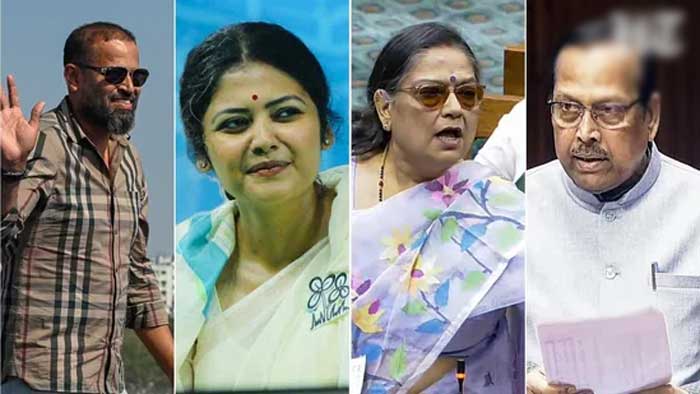
A dramatic rebellion within the Trinamool Congress (TMC) has reignited a long-running constitutional debate over India’s anti-defection law, after 20 rebel MPs informed Lok Sabha Speaker Om Birla that they had merged with a little-known political party that holds no elected seats anywhere in the country.
The move, apparently designed to avoid disqualification under the Tenth Schedule of the Constitution, mirrors a similar strategy employed earlier this year by seven Aam Aadmi Party (AAP) MPs in the Rajya Sabha.
At the heart of the controversy is a legal question the Supreme Court has yet to conclusively settle: Can a group of legislators claim protection under the anti-defection law’s merger provision on their own, or must the political party they were elected from formally approve the merger?
What the anti-defection law says
Introduced through the 52nd Constitutional Amendment in 1985, the anti-defection law was designed to curb political defections and instability caused by lawmakers switching parties after elections.
The law disqualifies legislators who voluntarily give up their party membership or defy party whips during voting.
While an earlier provision protected one-third of legislators who broke away as a “split”, that exception was removed through the 91st Constitutional Amendment in 2003.
Today, the only major protection available is under the “merger” clause. Paragraph 4 of the Tenth Schedule states that disqualification does not apply if the original political party merges with another party and at least two-thirds of the legislature party supports the move.
The TMC rebellion
The crisis emerged after TMC’s defeat in the West Bengal Assembly election, which paved the way for the BJP’s first government in the state.
A group of 20 Lok Sabha MPs, including senior party leaders and several prominent public figures, submitted letters to the Speaker declaring that they had merged with the Nationalist Citizens Party of India (NCPI), a party registered in 2022 that currently holds no elected office.
If the merger is recognised, TMC’s strength in the Lok Sabha would shrink dramatically, while the NDA’s numbers would receive a significant boost.
TMC leadership has strongly opposed the move. Party leaders argue that the TMC remains a single, unified political organisation and that lawmakers cannot independently engineer a merger without the party’s approval.
Independent MP and senior lawyer Kapil Sibal echoed that argument, saying the rebels should face disqualification because only the political party itself can decide to merge with another organisation.
The unresolved legal question
The dispute centres on differing interpretations of Paragraph 4 of the Tenth Schedule.
One reading suggests that both conditions are necessary: the political party must formally merge, and at least two-thirds of legislators must support the decision.
Another interpretation argues that support from two-thirds of the legislature party alone is sufficient to trigger protection from disqualification.
The debate gained prominence following the Supreme Court’s 2023 ruling in the Maharashtra political crisis, where the court emphasised a clear distinction between a political party and its legislative wing. The judgment suggested that legislators cannot claim authority over the identity or decisions of the political party simply because they command a majority within the legislature.
However, a separate 2022 ruling by the Bombay High Court in a Goa defection case appeared to support the view that a two-thirds legislative majority may be enough to qualify for the merger exception.
That matter is currently pending before the Supreme Court, whose eventual verdict is expected to clarify the scope of the merger provision.
Speaker’s decision under scrutiny
For now, the immediate decision rests with Lok Sabha Speaker Om Birla, who will examine the merger claim and determine whether the rebel MPs are protected under the Tenth Schedule or liable for disqualification.
Until a ruling is made, the lawmakers remain in a constitutional grey area. Technically elected on TMC tickets, they continue to be subject to the party’s whip and could face additional disqualification proceedings if they defy party directions inside Parliament.
As the Supreme Court prepares to address the broader constitutional questions surrounding mergers and defections, the TMC rebellion has become the latest and perhaps most consequential test of India’s anti-defection framework since the split provision was abolished more than two decades ago.
Comments are closed.