
India Accuses UN Of ‘Selective Targeting’ After Rights Experts Raise Alarm Over Protest Crackdown

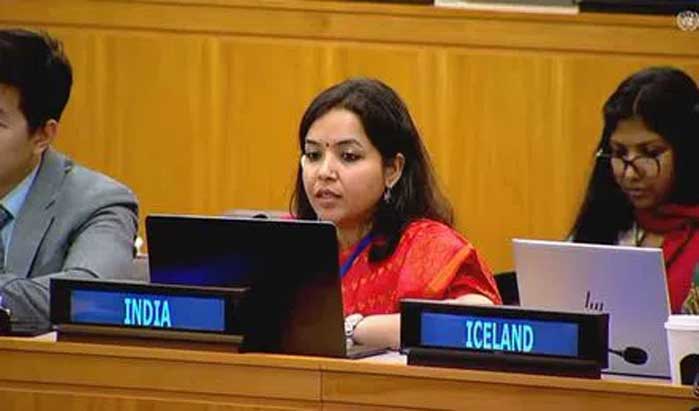
India has pushed back against criticism from United Nations human rights experts over the police response to youth-led protests in New Delhi, saying human rights should not be used as an instrument of political pressure or the selective targeting of countries.
Barkha Tamrakar, deputy secretary in the Ministry of External Affairs (MEA), delivered India’s response at the United Nations General Assembly’s Third Committee on Tuesday. She called for engagement with international human rights mechanisms based on dialogue, consultation, cooperation, transparency and non-selectivity.
The response came after more than 20 independent UN human rights experts expressed concern over what they described as a “repeatedly heavy-handed police response” to peaceful demonstrations in the national capital. The experts called for investigations into reported violations and urged authorities to ensure accountability.
India Warns Against Politicisation Of Human Rights
Addressing the Third Committee during a discussion on the Working Group on Enforced Disappearances, Tamrakar said international human rights engagement should be guided by established principles rather than political considerations.
“Human rights not to be used as an instrument of political pressure or selective country targeting,” she said.
India also cautioned against presenting allegations and incomplete statistics as established findings. Tamrakar urged delegations to cite reports accurately and not treat humanitarian communications as definitive judgments.
“We call on delegations to cite the report faithfully, not to inflate a humanitarian communication into a verdict,” she said.
India maintained that it was prepared to clarify specific, properly documented cases through established channels but opposed attempts to use unverified allegations to portray the country negatively.
The statement formed part of India’s broader response to international scrutiny of its handling of protests and allegations of human rights violations.
UN Experts Flag Alleged Excessive Force Against Protesters
The UN experts raised concerns on Tuesday about the treatment of demonstrators involved in recent youth-led protests in New Delhi and other Indian cities.
According to the experts, law enforcement personnel had reportedly used force against unarmed students, including baton charges, despite the peaceful nature of the assemblies. They also alleged that thousands of people had been prevented from joining demonstrations.
The experts cited reports of injuries and ill-treatment during protests and related detentions. They expressed particular concern over allegations of sexual violence and other forms of gender-based abuse.
They urged Indian authorities to stop the use of excessive force, lift blanket restrictions on public assemblies and refrain from the misuse of digital surveillance, including biometric monitoring and internet disruptions.
The experts also called for an independent, impartial and thorough investigation into the conduct of law enforcement personnel, alongside accountability and remedies for people affected by alleged violations.
Protests Linked To Demands Over Voter Roll Revision
The recent demonstrations have been led by opposition parties, student groups and youth activists demanding the resignation of Chief Election Commissioner Gyanesh Kumar.
The protests are linked to a revision of electoral rolls that critics say has unfairly affected eligible voters and could benefit Prime Minister Narendra Modi’s Bharatiya Janata Party (BJP).
Protesting groups have alleged that around 130 million names were removed from voter lists, with disproportionate effects on poor, homeless and minority communities.
The Election Commission has rejected allegations of politically motivated deletions, saying the exercise targeted duplicate, deceased, shifted and otherwise ineligible voters. It has also maintained that people wrongly excluded from the rolls can pursue appeals.
The claims surrounding the voter-list revision remain contested, with opposition groups demanding accountability and electoral authorities defending the process.
India Previously Rejected UN Human Rights Office’s Concerns
India has also criticised earlier comments by the UN Human Rights Office over mass detentions linked to demonstrations in Delhi.
On October 10, the UN office expressed concern over reports of the detention of protesters, protest organisers, civil society members, lawyers and journalists before and during large-scale demonstrations.
It urged Indian authorities to respect the right to peaceful assembly, exercise restraint and ensure that restrictions on protests meet strict tests of necessity and proportionality.
India subsequently described the concerns as unwarranted interference in its internal affairs, arguing that peaceful assembly is protected by the Constitution and that law enforcement agencies act in accordance with the law.
New Delhi also accused the UN office of applying its standards selectively, pointing to what it described as a lack of comparable criticism of law enforcement actions elsewhere.
Comments are closed.