
‘Anti-reform, selfish politics’: Narendra Modi hits out at Opposition after women’s bill setback

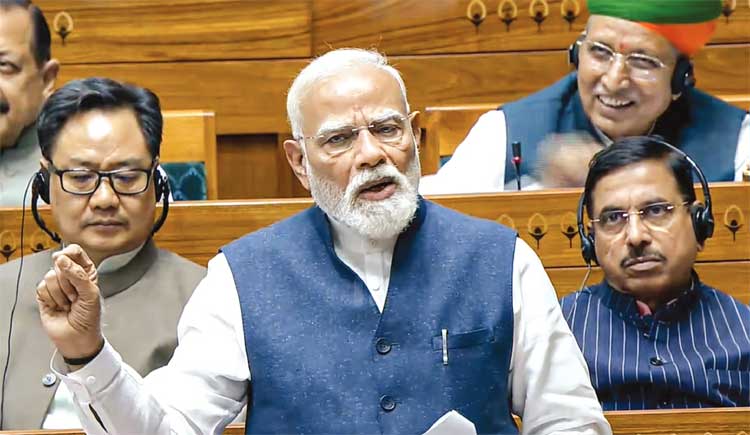
Narendra Modi on Saturday sharply criticised the Opposition after a key Constitution amendment bill failed in Parliament, comparing their stance to “foeticide” and asserting that his government will continue efforts to secure greater representation for women.
In a televised address, Modi said the bill was introduced with “honest intent” to expand the Lok Sabha and ensure women a stronger role in governance, but accused the Opposition of blocking it for political reasons. He specifically targeted Indian National Congress, along with the Samajwadi Party, Trinamool Congress and Dravida Munnetra Kazhagam, warning they would face public backlash.
The proposed amendment sought to raise the Lok Sabha’s strength to 850 seats and implement 33% reservation for women ahead of the 2029 elections. However, it failed to secure the required two-thirds majority, despite last-minute efforts by Home Minister Amit Shah to address concerns over seat distribution.
Modi dismissed the Opposition’s objections—particularly around delimitation and population-based seat allocation—as “excuses” aimed at denying women their rights. He accused these parties of prioritising political interests over national interest and claimed their resistance stemmed from fear of losing influence if more women entered legislatures.
Reflecting on the vote, Modi said it was disappointing to see Opposition leaders “celebrating” the bill’s defeat, calling it an insult to women across the country. He maintained that while the government lacked the numbers in Parliament, it had the full support of women voters, who he said would respond in due course.
The Prime Minister also rejected claims that the proposal would disadvantage southern states, asserting that the plan aimed to increase representation across all regions without reducing anyone’s share.
Meanwhile, Opposition leaders pushed back strongly. Congress president Mallikarjun Kharge accused Modi of turning an official address into a political attack, while Trinamool Congress MP Derek O’Brien alleged that women’s reservation was being used as a cover to push through contentious delimitation changes.
The defeat of the bill marked a rare legislative setback for the government, and has intensified the political battle over women’s representation, electoral boundaries, and the broader reform agenda.
Comments are closed.