
Are you a staunch Hindu, do you eat non-veg?’ Ram Temple CEO candidates asked in Google form

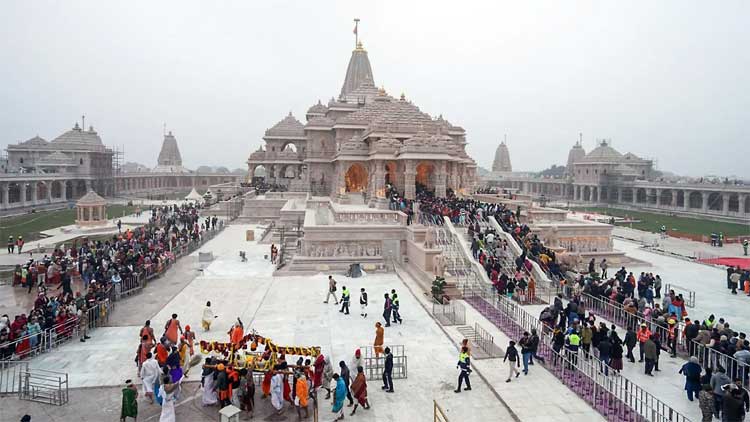
Candidates shortlisted for the post of the first full-time chief executive officer (CEO) of the Shri Ram Janmabhoomi Teerth Kshetra Trust were asked an exhaustive set of questions covering everything from their religious practices and dietary habits to their administrative experience and vision for the Ram Temple, people familiar with the matter said.
The 18 candidates shortlisted from around 5,200 applicants were required to fill out a 34-point Google form before appearing for interviews in Ayodhya. The questionnaire sought details about their professional experience, family background, religious practices, leadership abilities and social engagements.
Candidates were also asked about their personal religious practices, including whether they kept a shikha (tuft), wore a janeu (sacred thread), followed a vegetarian diet, consumed alcohol and considered themselves staunch Hindus.
“Questions such as do you keep shikha, do you wear a janeu, are you pure vegetarian or do you eat non-vegetarian food, do you consume alcohol or are you a teetotaller, are you a staunch Hindu, and whether you would be comfortable wearing attire according to Hindu traditions were asked in the Google form,” one person said on condition of anonymity.
The candidates were also questioned about their previous postings, experience in managing large crowds, faith in Lord Ram and their families.
All 18 shortlisted candidates had earlier appeared for online interviews. On Tuesday, eight candidates, including four former IAS officers, appeared for face-to-face interviews.
A second person said each interview lasted between one and two hours and was designed to assess more than administrative competence.
“The interview sought to test not just the candidate’s administrative skills but also devotion, temperament and vision for the world’s most high-profile temple project,” the person said.
Probable candidates
The identities of the shortlisted candidates have not been officially disclosed. However, a person familiar with the selection process said former IPS officer Rajesh Pandey is among those shortlisted and is scheduled to appear for an in-person interview on Wednesday.
Pandey is a former inspector general of the Uttar Pradesh Police. He previously served as senior superintendent of police in Lucknow and was a founder-member of the Uttar Pradesh Special Task Force. His last posting was as IG, Bareilly range.
He also serves as secretary of the historic Hanuman Mandir in Aliganj, Lucknow, which witnesses large gatherings of devotees during major festivals.
Retired IAS officer Yogeshwar Mishra, who served as Faizabad district magistrate from January 7 to March 26, 2016, neither confirmed nor denied reports that he had been shortlisted. He last served as divisional commissioner of Gonda.
Selection process
The selection panel comprises former Supreme Court judge Justice Pramod Kohli, retired Lt Gen Vishnukant Chaturvedi and Suresh Haware.
The panel has been tasked with selecting three candidates and submitting their names to the Trust by September 2, when its executive committee is scheduled to meet. The Trust will subsequently interview the three finalists and select the CEO.
The appointment of a full-time CEO comes amid allegations of embezzlement of donations, which have brought increased scrutiny on the Trust’s financial management. Eight people have been arrested in connection with the case, while three officials, including former Trust general secretary Champat Rai, have stepped down.
The CEO will serve as the Trust’s highest executive authority, overseeing statutory, financial and administrative functions, developing systems for managing the temple’s massive pilgrim footfall, coordinating security arrangements with central and state agencies, and ensuring the smooth conduct of rituals and festivals.
A senior Trust member said the sensitivity of the position means the final appointment is likely to be made with the direct involvement of the Centre and the Rashtriya Swayamsevak Sangh (RSS).
“The person who sits on the CEO’s chair will be someone both the government and the Sangh are comfortable with,” the member said, requesting anonymity.
The member added that even future appointments to the CEO’s office are likely to require approval from the Centre and the RSS.
Comments are closed.