
Baba Barfani melts over 90% within 5 days of Amarnath Yatra 2026: Climate change or rising pilgrim footfall?

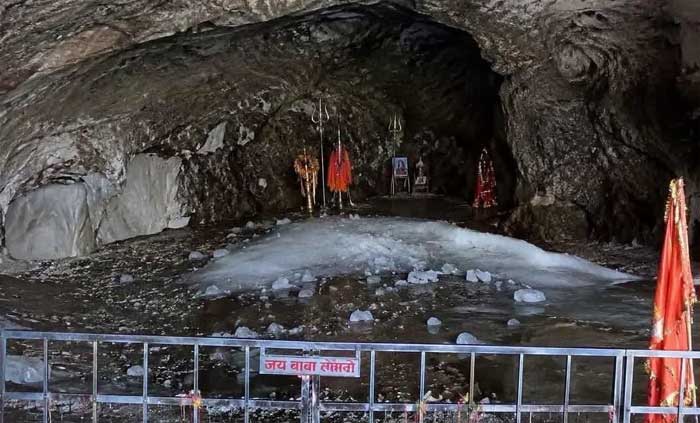
The Amarnath Yatra 2026 has witnessed a massive influx of devotees, but alongside the record pilgrim turnout, concerns have resurfaced over the rapid melting of the sacred ice Shivling, also known as Baba Barfani.
The pilgrimage, which began on July 3, has drawn thousands of devotees to the holy cave shrine in Jammu and Kashmir. However, within days of the 57-day Yatra, reports and images circulating on social media suggested that the naturally formed ice lingam had melted by more than 90 per cent. While the Shri Amarnath Shrine Board (SASB) has not released an official scientific assessment, the development has once again sparked debate over the reasons behind its early disappearance.
Climate change under scrutiny
Many experts believe climate change remains the biggest factor. The Himalayas are warming faster than many other mountain regions, leading to rising temperatures, changing snowfall patterns and retreating glaciers.
The ice Shivling forms naturally from freezing water droplets inside the cave, making it highly sensitive to even minor changes in temperature and humidity. Scientists say these environmental shifts can significantly affect its formation and longevity.
Environmental concerns over infrastructure
Some environmentalists also point to growing human activity around the shrine. Over the years, roads have been widened, temporary shelters and community kitchens expanded, electricity and solar lighting introduced, and projects such as a proposed ropeway approved to improve pilgrim access.
Experts say such large-scale infrastructure development, combined with increasing footfall, could be altering the cave’s delicate microclimate and putting additional pressure on the fragile Himalayan ecosystem.
Record pilgrim turnout
The 2026 Yatra has seen one of its highest-ever turnouts. More than 93,000 devotees visited the shrine during the first four days, prompting authorities to urge unregistered pilgrims to wait for their scheduled dates.
Jammu and Kashmir Lieutenant Governor Manoj Sinha, who heads the Shri Amarnath Shrine Board, described the response as unprecedented compared with the past four years. Authorities have capped daily pilgrim numbers on both the Pahalgam and Baltal routes while warning that unregistered visitors are straining security arrangements and infrastructure.
Political concern
People’s Democratic Party leader Iltija Mufti raised concerns over the rapid melting, attributing it to climate change, deforestation, illegal mining, poor waste management and large-scale construction activities in the region.
She also expressed reservations over proposed infrastructure projects, saying development should not come at the cost of the shrine’s fragile environment.
No definitive scientific conclusion yet
Experts caution that no official scientific study has conclusively linked the early melting of the ice Shivling to a single cause. They say a combination of climate change, weather variations, rising pilgrim numbers and infrastructure development may all be contributing factors.
Researchers have called for detailed scientific studies to better understand the phenomenon while ensuring that religious tourism continues in a sustainable manner that protects the ecologically sensitive Himalayan region.
Located at an altitude of nearly 3,900 metres in Jammu and Kashmir’s Anantnag district, the Amarnath Cave is home to one of Hinduism’s holiest shrines. The naturally formed ice Shivling grows and shrinks each year depending on snowfall, temperature and humidity, making it a unique natural phenomenon as well as a revered symbol of faith.
Comments are closed.