
‘False, fabricated, politically motivated’: Delhi court on Brij Bhushan Singh sexual harassment case

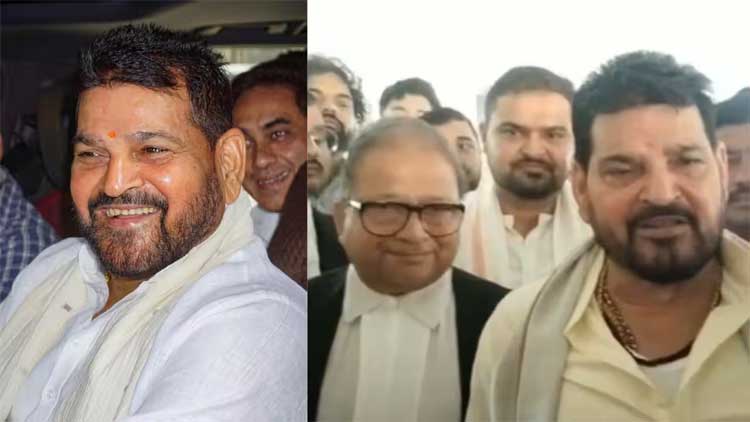
A Delhi court, while acquitting former Wrestling Federation of India (WFI) chief Brij Bhushan Sharan Singh and former WFI assistant secretary Vinod Tomar, said the sexual harassment allegations against them were “false” and “fabricated” and appeared to be part of a “deep conspiracy which seems to be politically motivated”.
The court acquitted Singh, a former BJP MP from Uttar Pradesh, and Tomar last week for lack of evidence, nearly two years after the trial began.
In its detailed judgment, Additional Chief Judicial Magistrate Ashwini Panwar said the accounts given by the complainants “discredit the prosecution case completely”. The court observed that the allegations appeared to have been made as part of a conspiracy allegedly involving coaches associated with Mahadev Academy and two prosecution witnesses.
The judgment highlighted several “material contradictions” in the successive statements of the witnesses, inconsistencies between documentary evidence and the alleged dates and circumstances of the incidents, and the absence of contemporaneous complaints.
Contradictions over alleged Mongolia incident
The court examined an alleged incident during an Olympic qualification event and pointed to discrepancies in the complainant’s accounts about when and where it occurred.
“In one statement, the incident was stated to have taken place in Turkey in 2015, whereas in the subsequent version, the same was stated to have occurred in Mongolia in 2016,” the court said.
It noted that the discrepancy was not a minor variation but involved “the country and the year” of the alleged incident, which the court considered fundamental details.
Court examines alleged 2018 Delhi stadium incident
The court also examined an alleged incident at a Delhi stadium in 2018, which the complainant said occurred in the presence of family members, coaches and athletes.
However, no independent eyewitness appeared before the court to testify against Singh. The judgment questioned why people allegedly present during the incident did not intervene or assist the complainant.
One witness told the court that Singh had his hand on the complainant’s shoulder, but the judgment noted there was no mention of a forcible hug or an attempt by the complainant to push him away.
The court also considered the testimony of two witnesses who turned hostile during the trial. According to the judgment, they denied being sexually harassed by the accused and said their statements under Section 164 of the CrPC had been made under pressure and threats.
Court flags similarities in complaints
The judgment also examined the circumstances surrounding the complaints filed by the wrestlers.
The court noted that before one of the complainants participated in a protest, no specific allegation of sexual harassment had been made and no female wrestler was identified as having faced such harassment.
It subsequently observed that selected female wrestlers came forward and that similar allegations were incorporated into formal complaints submitted to police.
The judge noted a “similarity in the allegations” made by the complainants, with several alleged incidents said to have taken place in public settings and in the presence of other people. However, the court said contradictions in the accounts of complainants and witnesses created “more than sufficient reasonable doubt” to undermine the prosecution’s case.
Of the five victims whose allegations formed the basis of the charges, two did not support the prosecution during the trial. They told the court they had been “forced/pressurised” to give statements at the instance of two prosecution witnesses.
The court said there was no evidence showing that their decision not to support the prosecution was the result of any action by the accused.
Court questions delayed complaints
The court also examined the conduct of the witnesses after the alleged incidents and noted that some had maintained “cordial relations” with Singh and continued interacting with him at public events.
The judgment concluded that the allegations appeared “imperfect to be true”, describing them as seemingly rehearsed and “planted”, particularly because the complaints were filed after a considerable delay.
The court ultimately acquitted Singh and Tomar, holding that the prosecution had failed to establish the charges beyond reasonable doubt.
Comments are closed.