
RBI Raises Repo Rate By 25 Bps To 5.5%, Shifts Stance To ‘Calibrated Tightening’

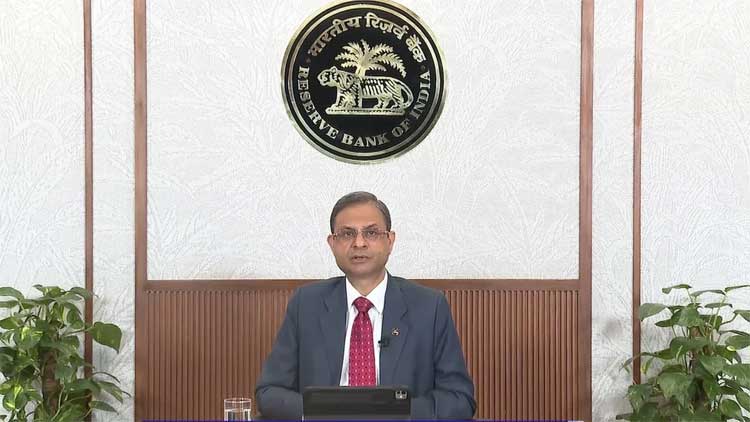
The Reserve Bank of India (RBI) on Wednesday raised its benchmark repo rate by 25 basis points to 5.5%, marking its first rate hike in nearly four years as inflationary pressures increased despite resilient economic growth.
The six-member Monetary Policy Committee (MPC) unanimously voted to increase the policy rate and changed its stance to “calibrated tightening” from “neutral”, signalling a stronger focus on containing inflation.
RBI Flags Inflation Concerns
Announcing the Monetary Policy Statement, RBI Governor Sanjay Malhotra said the global economic environment remained challenging due to geopolitical developments, but India’s economy continued to show resilience and broad-based momentum.
“The MPC noted that the global context, on account of geopolitical developments, remains challenging. Nonetheless, the Indian economy has been strong and the economic momentum remains broad-based. Moreover, the economy is expected to remain resilient,” Malhotra said.
He, however, flagged concerns over the inflation outlook, saying available data showed that inflation and its outlook were no longer as benign as they had been last year.
“With headline CPI inflation expected to average almost 5.8% in the next three quarters, including this, and core inflation projected at 4.4% for this financial year,” Malhotra said.
The MPC’s three-day meeting, held from October 5 to 7, came after the central bank kept the repo rate unchanged at 5.25% in August and retained a neutral stance, citing the need for greater clarity on inflation and growth dynamics.
RBI Raises Growth Forecast Despite Global Risks
The RBI also revised its growth outlook upward despite persistent global risks.
Malhotra said geopolitical tensions, elevated international commodity prices, additional friction in global trade and tighter global financial conditions could weigh on India’s growth prospects.
“Taking all these factors into consideration, real GDP growth for this year is projected at 7.1%, with Q2 at 7.2%, Q3 at 6.9% and Q4 at 6.8%,” he said.
The 40-basis-point upward revision reflected the strength of economic activity despite significant global challenges, Malhotra added.
India’s real GDP growth stood at 7.8% in the first quarter, supported by resilient private consumption and strong investment activity, which increased by nearly 12%. Net exports also contributed positively to growth.
“We exhibited resilience amidst global headwinds, as evident from real GDP growth of 7.8% in Q1,” Malhotra said.
High-frequency indicators for the second quarter suggested that economic activity had maintained momentum, although growth had moderated somewhat from the previous quarter.
Manufacturing activity remained steady despite cost pressures, while services activity stayed broad-based, supported by stronger domestic and external demand. Manufacturing and services PMI readings remained in the expansion zone during Q2, although the pace of expansion slowed from Q1.
Private consumption also remained broadly resilient, supported by discretionary spending, while fixed investment continued to show strength.
First Repo Rate Hike Since February 2023
The latest hike marks the RBI’s first repo rate increase since February 2023, when the central bank raised the rate by 25 basis points to 6.5%.
The RBI subsequently kept the rate unchanged through 2023-24 before beginning its rate-cut cycle in 2025. The repo rate stood at 5.25% before Wednesday’s decision.
A majority of participants in a PTI poll had expected a 25-basis-point hike along with a hawkish tone at the policy review, although views were divided over whether the RBI would change its policy stance.
The government has mandated the RBI to keep consumer price index (CPI)-based retail inflation at 4%, with a tolerance band of two percentage points on either side.
Retail inflation accelerated to 4.82% in August from 4.45% in July.
Comments are closed.