

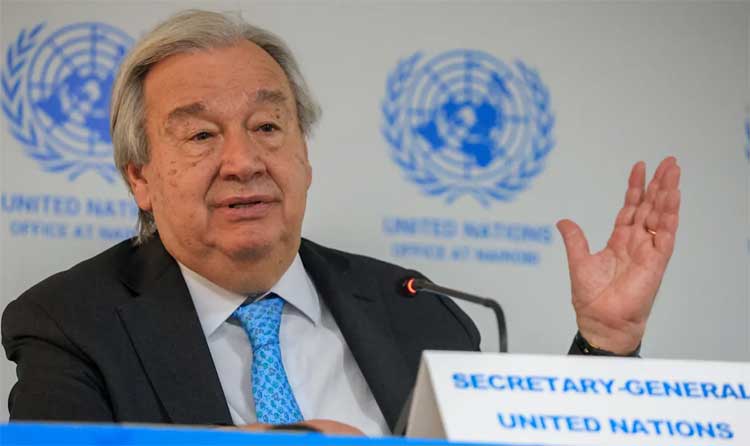
United Nations Secretary-General Antonio Guterres has proposed three options for maintaining international oversight along the Israel-Lebanon border after the mandate of the UN peacekeeping force in southern Lebanon expires on December 31, offering pathways to sustain monitoring and support efforts aimed at ending the long-running conflict between Israel and the Iran-backed Hezbollah movement.
In a report submitted to the UN Security Council, Guterres outlined three possible configurations for a successor UN presence, ranging from 5,525 personnel to 1,980 personnel, including unarmed military observers. Each option would preserve UN monitoring of the Blue Line—the UN-demarcated boundary between Israel and Lebanon—while supporting the deployment of the Lebanese Armed Forces and reinforcing diplomatic efforts to implement the 2006 Security Council resolution that ended the last full-scale war between Israel and Hezbollah.
The proposals come after the Security Council voted unanimously in August 2025 to terminate the 8,100-member UN Interim Force in Lebanon (UNIFIL), following pressure from the United States and Israel. The Council simultaneously asked the secretary-general to recommend alternatives for advancing the goals of the 2006 resolution, which calls for Hezbollah’s disarmament, the withdrawal of Israeli forces, and the deployment of the Lebanese army as the sole armed force throughout the country.
Guterres stressed that recurring clashes between Israel and Hezbollah underscore the urgency of implementing the resolution, describing it as the central framework for achieving lasting stability. He said continued UN military monitoring of the Blue Line remains essential and argued that any future arrangement should retain a uniformed UN presence capable of facilitating de-escalation, dialogue, liaison, coordination and support for Lebanese security forces.
The secretary-general noted that the largest of the three proposed forces would be best positioned to maintain credible observation along the full length of the Blue Line. The military component would work alongside a strengthened UN Special Coordinator for Lebanon, who would continue leading political efforts to advance implementation of the 2006 resolution.
UN spokesperson Stephane Dujarric said Tuesday that the secretary-general hopes the Security Council will reach a decision on the proposals in the near future.
Comments are closed.