

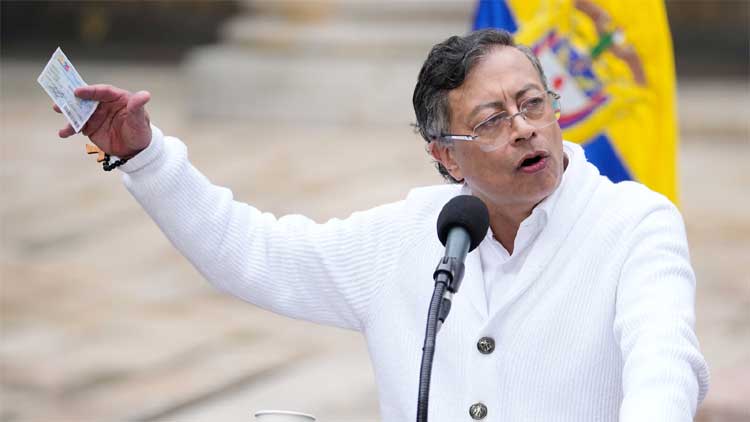
The European Union’s Election Observation Mission on Tuesday dismissed allegations of fraud in Colombia’s presidential election, saying Sunday’s vote was conducted in a “transparent, orderly and fluid” manner despite claims to the contrary by President Gustavo Petro.
Mission chief Esteban González Pons said none of the 12 presidential candidates had raised concerns about electoral irregularities with EU observers. His remarks came as Colombia prepares for a June 21 runoff between lawyer Abelardo de la Espriella and Senator Iván Cepeda, who emerged as the top two candidates in the first round.
Cepeda, the candidate backed by Petro’s Historical Pact coalition, initially declined to recognize the preliminary results on election night, saying he would wait for the official vote count overseen by judges and notaries. Around the same time, Petro alleged on social media that hundreds of thousands of voters had been improperly added to electoral rolls, though he provided no evidence.
Official results showed de la Espriella winning 43.7 percent of the vote, ahead of Cepeda with 40.9 percent, in an election that drew more than 23 million voters.
Cepeda later moderated his position, stating that election monitors from his campaign had not detected irregularities significant enough to suggest fraud. He also expressed confidence about defeating de la Espriella in the runoff and challenged his rival to a debate.
Petro, who is constitutionally barred from seeking re-election, reiterated his allegations on Tuesday, claiming without evidence that hundreds of thousands of voters had been registered after the legal deadline and questioning unusually high turnout at some polling stations.
Colombia’s National Registrar’s Office said it had reviewed 99.98 percent of voting tables and found only a 0.06 percent variation between the preliminary count and the official tally. The EU mission also conducted its own verification by comparing a random sample of tally sheets with physical ballots and reported no discrepancies.
“We can discard any manipulation of data in the quick count and in the final count,” González Pons said.
Under Colombian law, election results are certified by judicial authorities rather than the president. Political observers have warned that unsubstantiated fraud allegations could deepen polarization and heighten tensions ahead of the June 21 runoff.
Comments are closed.