
Delimitation Bill: Do the numbers favour the Opposition in the Lok Sabha?

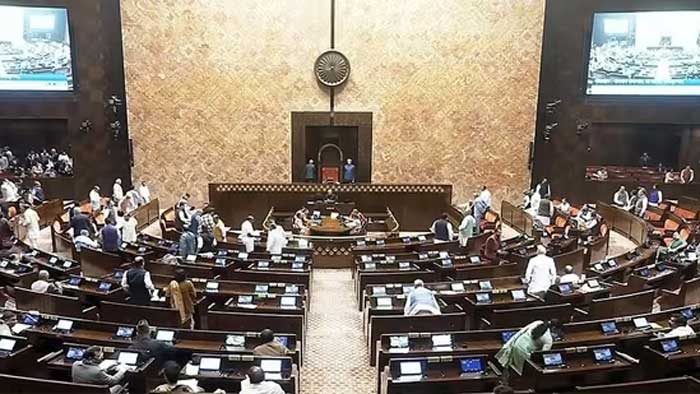
The Government of India is heading into a high-stakes legislative battle as it prepares to introduce the Constitution (131st Amendment) Bill, 2026 during a three-day special session of Parliament starting Thursday.
The bill, which proposes expanding the Lok Sabha to 850 seats, has triggered strong resistance from a united Opposition, which has termed the move politically motivated and linked to a contentious delimitation exercise.
Numbers game in Parliament
As a constitutional amendment under Article 368, the bill requires a special majority—approval by a majority of the total membership in each House and at least two-thirds of members present and voting.
In the Lok Sabha, with an effective strength of around 540 members, the bill would need at least 360 votes if all MPs are present. The ruling NDA has about 293 MPs, falling short by roughly 67 votes. The Opposition bloc, with around 234 MPs, has enough strength to block the bill.
Key Opposition parties such as the Congress, Samajwadi Party, Trinamool Congress and DMK together hold a significant number of seats, making passage difficult without cross-party support. Allies like the Telugu Desam Party (TDP), with 16 MPs, have also expressed concerns over the impact of delimitation on southern states.
In the Rajya Sabha, the NDA is closer to the required numbers but still short. With a total strength of 244, at least 163 votes are needed if all members are present, while the NDA has around 141–142 members. Abstentions could lower the effective threshold.
Opposition pushback
At a meeting chaired by Mallikarjun Kharge, Opposition parties agreed to oppose the bill over its link to delimitation, calling it a “backdoor” attempt to redraw electoral boundaries ahead of the 2029 elections.
Leaders including Rahul Gandhi and Akhilesh Yadav described the move as a “conspiracy.”
M. K. Stalin has announced statewide protests, calling the delimitation plan a “black law” and warning of serious consequences if the Centre proceeds.
“We are not against women’s reservation, but we oppose the delimitation provisions in the bill,” Kharge said, reflecting the Opposition’s stance.
Congress leader K. C. Venugopal accused the government of trying to “bulldoze” a flawed and anti-federal exercise, while Derek O’Brien termed it a “devious agenda.”
Government’s defence
The government maintains the bill is a landmark step toward implementing women’s reservation. Union minister Kiren Rijiju said there is broad agreement on the principle and expressed confidence that the required support will be secured.
Comments are closed.