
Europe’s net-zero ambitions face reality check as extreme heat intensifies

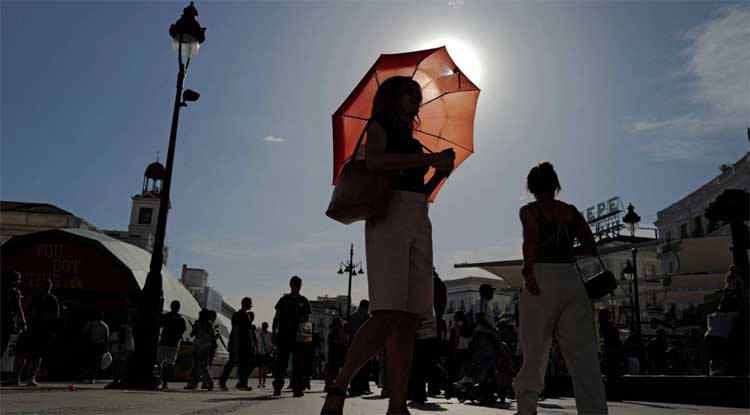
Europe’s record-breaking June heatwave has underscored the growing need for stronger climate adaptation measures, exposing how much of the continent’s infrastructure, businesses and public services remain unprepared for the immediate impacts of global warming despite ambitious emissions targets.
The European Union has positioned itself as a global leader on climate action, becoming one of the first major economies to legally commit to achieving net-zero emissions by 2050. However, temperatures exceeding 40°C across parts of the continent last month highlighted a widening gap between efforts to reduce emissions and preparedness for increasingly frequent extreme weather events.
The heatwave disrupted daily life across Europe, causing power outages, halting train services in Germany, forcing restrictions on outdoor work and even leading to rail buckling in Sweden. Spain alone reported around 1,000 excess deaths linked to the extreme temperatures.
“We’ve not been good enough on adaptation,” Poland’s Deputy Climate Minister Krzysztof Bolesta said, stressing that governments and businesses need to invest more in preparing for climate-related risks.
While the EU develops policies to cut greenhouse gas emissions, responsibility for adapting buildings, cities and public spaces largely rests with national governments. EU Climate Commissioner Wopke Hoekstra said an upcoming European climate resilience plan would focus on sharing best practices and preparing common risk scenarios, while allowing countries to tailor solutions to local conditions.
Official data show that between 2021 and 2025, nearly 72% of the EU’s climate-related spending was directed towards reducing emissions, while only 18% was allocated to adaptation projects, highlighting the imbalance in funding priorities.
Experts say businesses also lack financial incentives to invest in adaptation, unlike emissions reduction initiatives supported by carbon markets and renewable energy subsidies. As a result, many companies continue to view climate resilience as a long-term cost rather than an immediate necessity.
Economists warn that climate extremes are increasingly affecting Europe’s economic performance. According to ING, heatwaves, floods and droughts reduced the continent’s economic output by an estimated 0.3 percentage points last year, transforming extreme weather into a major macroeconomic factor.
Germany illustrates the challenge. Despite estimates that every day with temperatures above 30°C costs the economy hundreds of millions of euros in lost productivity, only about half of German office buildings are air-conditioned, compared with up to 95% in southern Europe.
Businesses are gradually adapting. Some have introduced low-cost measures such as reflective window films to reduce indoor temperatures, while others are redesigning work schedules to avoid peak afternoon heat. Larger changes, including heat-resilient urban planning, upgraded transport systems and climate-proof workplaces, are also gaining momentum.
Public health experts note that Europe has made significant progress since the devastating 2003 heatwave, when around 70,000 excess deaths were recorded. The World Health Organization estimates that current measures—including heat action plans, early warning systems, cooling centres and targeted support for vulnerable populations—have already prevented many deaths.
However, officials warn that as Europe continues to warm faster than any other continent, expanding climate adaptation efforts will be just as critical as cutting emissions to protect lives, infrastructure and economic growth.
Comments are closed.