
Sensex sinks over 600 points, Nifty below 24,250 as West Asia tensions rattle markets

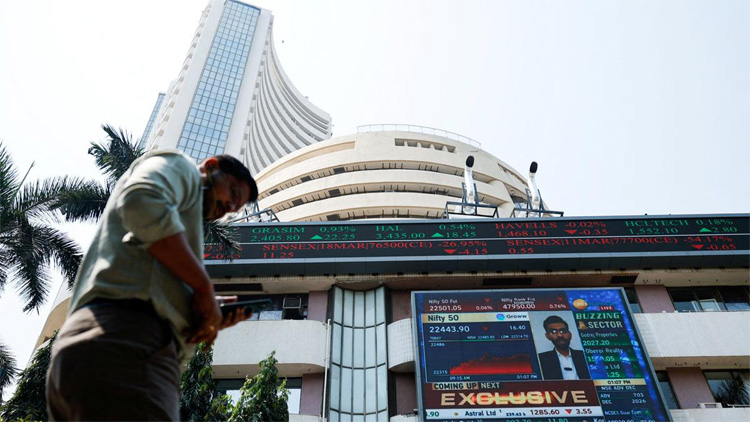
Indian benchmark equity indices opened sharply lower on Wednesday, with the Sensex falling more than 600 points and the Nifty 50 slipping below 24,250 as escalating tensions in West Asia dampened investor sentiment and pushed crude oil prices higher.
The BSE Sensex dropped as much as 625 points, or 0.8%, to an intraday low of 77,555.52, while the NSE Nifty 50 declined 191 points, or 0.79%, to 24,207.20. By 10 am, the Sensex was down 488 points at 77,689, while the Nifty traded 149 points lower at 24,250.
Selling was broad-based, with the Nifty Auto, FMCG, Oil & Gas and PSU indices losing more than 1% each. Broader markets also remained under pressure, with the Nifty Midcap 100 and Smallcap 100 falling 0.3% and 0.42%, respectively. Market breadth was weak, as declining stocks significantly outnumbered gainers on the NSE.
Among Sensex constituents, Asian Paints, ITC and InterGlobe Aviation (IndiGo) were the biggest losers, while Maruti Suzuki, Bajaj Finance, Hindustan Unilever, Reliance Industries and Bharat Electronics also traded in the red. Sun Pharma, Adani Ports, HDFC Bank, Infosys and Tech Mahindra bucked the trend with modest gains.
Why markets fell
- West Asia tensions: Investor sentiment weakened after fresh US strikes on Iran and Washington’s decision to revoke a licence allowing Iranian oil sales, heightening concerns over geopolitical instability and global energy supplies.
- Oil prices surge: Brent crude climbed above $76 a barrel, while US WTI crude also gained more than 2%, raising fears of higher inflation and increased import costs for oil-dependent economies like India.
- Rupee weakens: The rupee fell 20 paise to 95.16 against the US dollar in early trade after strengthening in the previous session, reflecting renewed demand for the greenback amid global uncertainty.
- Weak global cues: Asian equities traded lower, tracking overnight losses on Wall Street, where technology stocks led declines amid concerns over the sustainability of the AI-driven rally and the impact of rising geopolitical risks.
Analysts said markets are likely to remain volatile in the near term as investors closely monitor developments in West Asia, movements in crude oil prices and their potential impact on inflation, corporate earnings and global risk appetite.
Comments are closed.