
Vance says US ‘in the middle of the game’ as Iran sets terms for Hormuz reopening

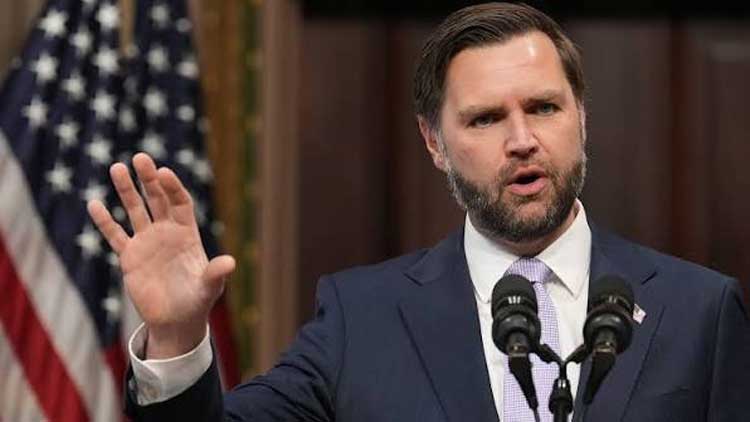
US Vice President JD Vance said Saturday that Washington was “in the middle of the game” in efforts to resolve the crisis surrounding the Strait of Hormuz, as Iran laid out conditions for reopening the crucial waterway.
In an interview with Fox News, Vance said the US was using “a host of diplomatic, economic and military tools” to secure the best possible outcome and indicated that some progress had been made in talks with Iran.
“Our expectation is you’re going to see the same amount of oil and gas come out of the Gulf that you saw before the conflict started,” Vance said, adding that Iran had given assurances on energy shipments. “But you know, we don’t trust. We verify.”
Vance said Washington was also working on a system to allow commercial vessels to transit the strait safely.
“What we’re really working through now is how you can actually set up a traffic scheme so that the ships that pass can pass through safely,” he said, adding that the process would include demining operations.
Iran sets conditions for reopening Hormuz
Iran said Saturday that it was “very close” to reaching an agreement with Oman on a new maritime transit arrangement for the Strait of Hormuz. However, Tehran said the waterway would not reopen until the United States changes its policies toward Iran.
Mohammad Bagher Zolghadr, secretary of Iran’s Supreme National Security Council and a commander in the Islamic Revolutionary Guard, said the US must stop threatening Iran and permanently end its military campaign against Iran and its regional allies.
Iran also demanded an end to the US naval blockade of its ports, the withdrawal of American forces from the region, compensation for war damage, the lifting of sanctions and the unconditional release of frozen Iranian assets.
Foreign Minister Abbas Araghchi said negotiators were nearing an agreement on temporary shipping lanes for vessels entering and leaving the Persian Gulf. However, he cautioned that such an agreement would not necessarily lead to the immediate reopening of the strait.
The ceasefire between the US and Iran lasted less than a month before collapsing over disagreements concerning control of the strategic waterway.
Oman urges caution as vessel attacks continue
Oman said negotiations on navigation arrangements were continuing in a “positive and constructive atmosphere” and urged all sides to avoid actions that could undermine progress.
The Omani foreign ministry also condemned repeated attacks on vessels transiting the Strait of Hormuz without directly naming Iran.
Meanwhile, Abu Dhabi National Oil Company (ADNOC) said one of its vessels was targeted by missiles while passing through the strait early Saturday, according to the UAE’s state-run WAM news agency. No injuries were reported and the situation was brought under control.
Three other vessels belonging to the UAE’s largest oil producer were also targeted this week, underscoring the risks facing commercial shipping in the region.
Will Washington accept a Hormuz deal?
It remains unclear how the US will respond to any agreement between Iran and Oman, particularly as Tehran insists Washington is not a party to the negotiations.
US President Donald Trump has repeatedly demanded the unrestricted reopening of the Strait of Hormuz and has threatened further military action against Iran if the waterway remains closed.
The US has also maintained a naval blockade of Iranian ports. Reuters reported that Washington could lift the blockade once Iran and Oman announce an agreement to restore commercial shipping, citing a US official who said a deal could come soon.
Any agreement will ultimately require approval from Iran’s Supreme Leader, Mojtaba Khamenei. Iranian officials have said the approval process could take time, potentially delaying an announcement.
Oil markets watch Hormuz talks
Oil prices have fluctuated as traders assess the possibility of an agreement that could restore millions of barrels of crude and other energy supplies from the Persian Gulf.
Brent crude settled above $83 a barrel, recording its third consecutive weekly decline, as markets weighed the prospects of a deal and a potential easing of disruptions through the Strait of Hormuz.
Comments are closed.